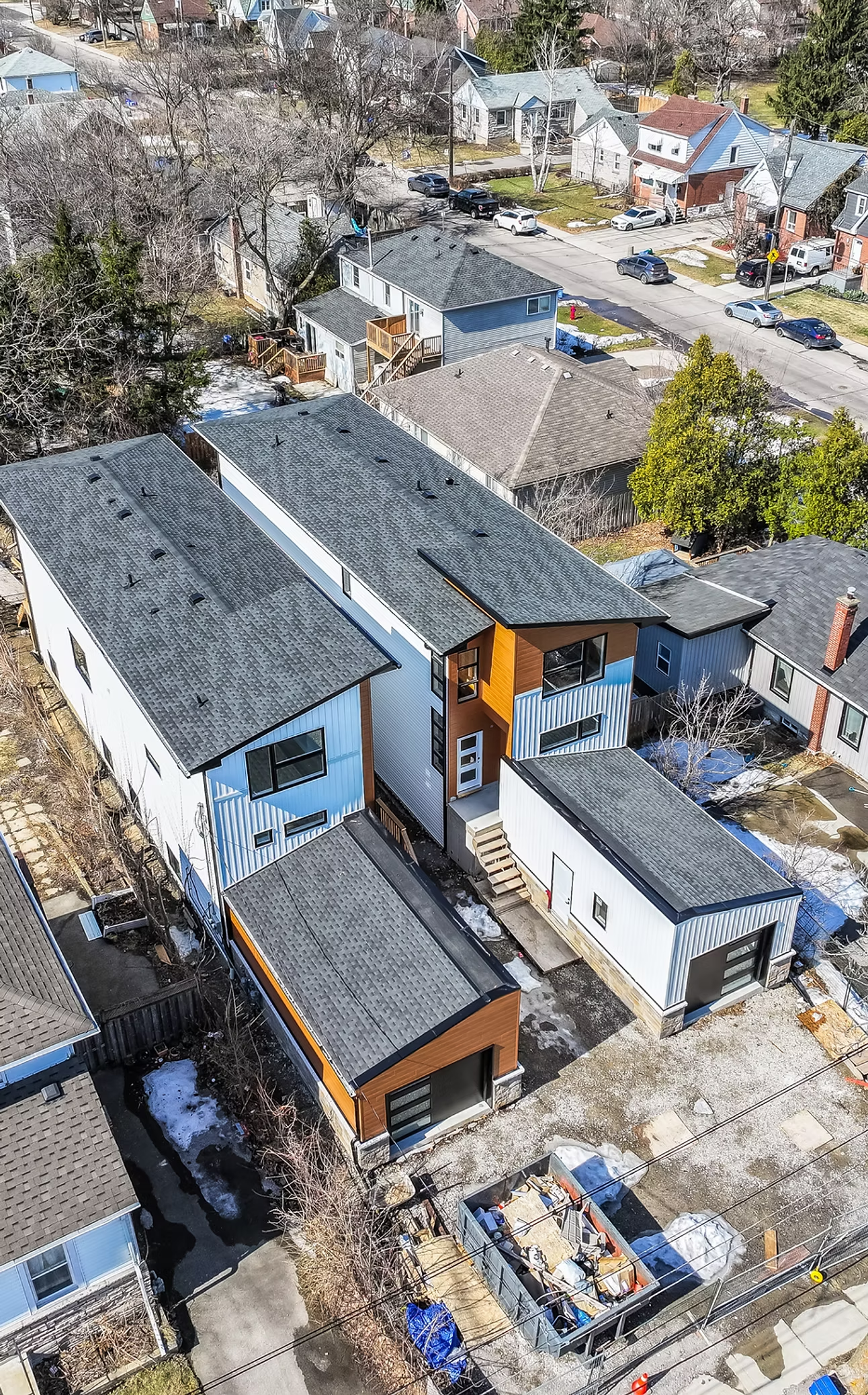
10 Signs Your Hamilton Roof Is Done Talking and Ready to Fail
10 Signs Your Hamilton Roof Is Done Talking and Ready to Fail
Here's the thing about roofs in Hamilton: they don't usually just give out overnight. They give you signs. Most homeowners miss them, not because they're hard to spot, but because nobody really goes looking until there's a brown ring on the ceiling and the drywall is already soft.
That's the expensive version of this story. The cheaper version starts with knowing what to look for before water gets involved.
Hamilton's climate makes this especially relevant. We sit right at the base of the escarpment, which means freeze-thaw cycles are more aggressive here than in most Ontario cities. Ice damming is a real problem, especially on the Mountain and in the lower city wherever attic ventilation is poor. Lake-effect moisture, debris from all those mature trees in the older neighbourhoods, summer storms that hit fast and hard. A roof that might go 25 years in Ottawa can be cooked at 18 here.
So let's talk about what to actually look for.
Age First. Everything Else Second.
Before any of the 10 signs below, the most important question is how old the roof is. Most asphalt shingle roofs in Hamilton have a working lifespan of 20 to 25 years. If yours is in that range, start budgeting for a roof replacement now, not after the next storm. By the time shingles look obviously bad from street level, you've usually got water working its way in somewhere.
Everything below compounds at an older roof age. Two signs on a 12-year-old roof? Probably a repair. Two signs on a 21-year-old roof? That's a different conversation.
The 10 Signs
1. Curling shingles. Walk the perimeter and look up. Shingles curling at the edges or lifting at the corners are done. Poor attic ventilation accelerates this, but so does age. And once it starts in one area, the surrounding shingles don't last long either.
2. Granules in the gutters. Clean your gutters and look at what comes out. Some granules are normal. A large handful after a storm, or dark bare patches visible on the shingles where the coating has worn clean through, means the shingle has used up its protection. UV damage happens fast after that.
3. Shingles missing after storms. Wind takes them. One missing shingle that gets patched fast isn't usually cause for alarm. But if you're up on a ladder every spring replacing shingles in the same spots, the adhesion strip has failed. Patching buys time, not solutions.
4. A roofline that's lost its shape. Go stand at the end of your driveway. Sight along the ridge and the eave line. If anything sags or dips, something is wrong beneath the shingles. Rotted sheathing, failed framing, years of slow moisture infiltration. This is the sign that moves fastest from "roof issue" to "structural issue." Don't sit on it.
5. Daylight in the attic. On a bright day, go up into the attic and let your eyes adjust. Any light coming through the roof boards is a gap. Water, cold air, and squirrels don't need much of an opening. If you see it, call someone before the next rain.
6. Ceiling stains. Brown rings or dark streaks on interior ceilings are the most obvious indicator that water has already made it in. In Hamilton especially, ice dams are the usual suspect. What happens is: heat escapes through a poorly insulated attic, melts the snow sitting on the roof, and that meltwater hits the cold overhang, freezes, and backs up under the shingles. You find out when the ceiling starts to show it. Sometimes months later.
7. Flashing problems. Chimneys, vents, skylights, valleys. That's where most leaks actually start, not through the shingles themselves but at the joints the flashing is supposed to seal. Rust staining, gaps, sections pulling away from the surface. If you've got this in more than one place, the roof is past its window.
8. Moss and algae. More common on north-facing slopes and under heavy tree cover, which describes a lot of older Hamilton neighbourhoods. Most people call it a cosmetic problem. It's not. Moss holds moisture against the shingle surface constantly. It doesn't let up. On a roof already showing other signs on this list, thick moss growth usually settles the question.
9. Higher energy bills. This one catches people off guard. But a failing roof usually means failing attic insulation too, and that hits your heating and cooling costs. If the bills have gone up and you can't explain it, the roof and attic system are worth looking at. Getting the ventilation right during a replacement makes a real difference year over year.
10. You've already repaired it multiple times. This one is really just math. If you've called a roofing contractor in Hamilton two or three times in the last few years to patch different sections, add up what you've spent. At some point that money belongs toward a replacement, and the longer you wait, the more you risk interior damage on top of the roofing cost.
When to Repair vs. When to Replace
One or two signs, roof under 15 years old: repair usually makes sense. Three or more signs, or anything past the 18-year mark: replacement is almost always the smarter investment. Repairs on a roof that's past its life expectancy have a way of creating more repairs.
What Infinity Gutters and Exteriors Covers
A full Hamilton roof replacement through Infinity Gutters and Exteriors means tear-off, deck inspection and repair where needed, drip edge, ice-and-water shield in the vulnerable zones, synthetic underlayment, new shingles, all flashing and pipe boots, and full site cleanup. They've been working across Hamilton, Burlington, Stoney Creek, and Ancaster since 2014, using BP Canada roofing products.
Book a Free Roof Inspection
If any of these signs are familiar, the starting point is a free inspection. Call Infinity Gutters and Exteriors at (289) 682-2990 or visit infinitygutters.ca. You'll get a clear read on whether you're looking at a repair or a full roof replacement in Hamilton, and what it actually costs.


